Understanding Minority Stress: Intersectionality, Healing, and Finding Community


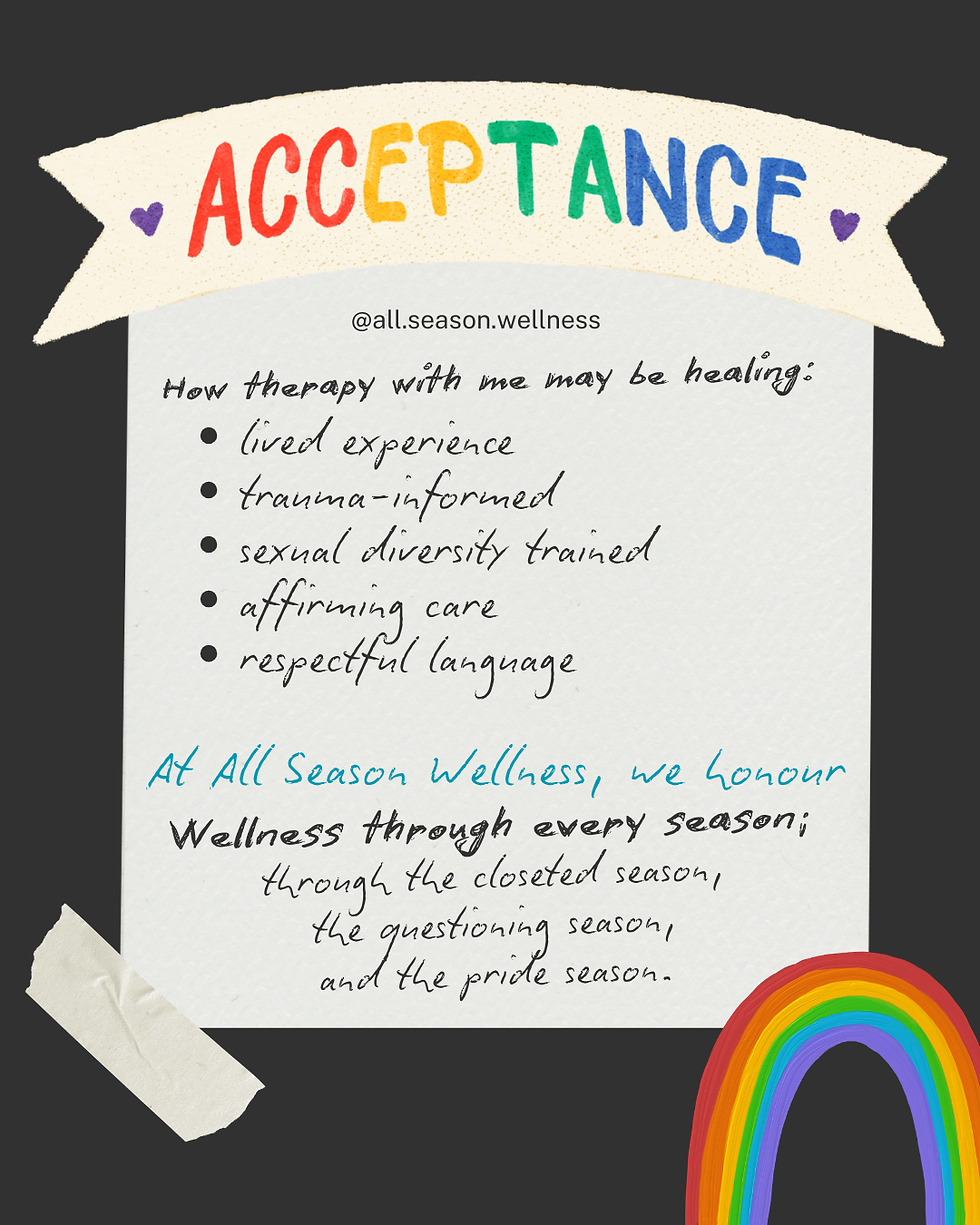
At All Season Wellness, we believe in honouring wellness through every season — the closeted season, the questioning season, and the pride season. To truly support LGBTQIA+ individuals, we have to talk about something that deeply impacts mental health: minority stress.
What Is Minority Stress?
Minority stress describes the chronic stress experienced by people from marginalized groups due to prejudice, discrimination, stigma, and microaggressions.
For 2SLGBTQIA+ individuals, this can look like:
Daily exposure to homophobia or transphobia
Subtle or overt microaggressions
Fear of rejection from family, workplaces, or communities
Navigating systems that weren’t built with you in mind
Unlike general life stress, minority stress is layered. It’s persistent. And it’s rooted in systemic inequities, not personal weakness.
Intersectionality: When Identities Overlap
Minority stress doesn’t exist in isolation. Many people hold multiple marginalized identities, and those intersections can amplify stress.
For example:
A trans woman who is Black
A queer person who is neurodivergent
A bisexual immigrant
A nonbinary person with a disability
Each identity brings unique lived experiences. When several intersect, the risk of discrimination and stress increases.
This concept, known as intersectionality, reminds us that identities are not separate compartments. They are layered, lived simultaneously, and deeply interconnected.
The Effects of Minority Stress
The psychological and social impacts of minority stress are real and well-documented. They can include:
Anxiety
Depression
Substance use
Risky coping behaviours
Housing instability
Employment discrimination
Internalized homophobia or transphobia
Over time, constantly bracing for harm or recovering from it takes a toll. The body and nervous system stay on alert. Even “small” daily experiences add up.
If you’ve ever felt exhausted by simply existing in certain spaces, you’re not alone.
Internalized Homonegativity/Homophobia: When the Hate Feels Personal
One of the most painful aspects of minority stress is internalized stigma.
When harmful messages are repeated enough, they can begin to feel personal and even true.
Overcoming minority stress often involves externalizing that hate. Recognizing that prejudice belongs to the system, not to you.
That work is hard, especially if you haven’t had a safe space to explore your identity.
Which brings us to something essential:
The Power of Community
Healing from minority stress doesn’t happen in isolation.
Finding affirming spaces can be transformative. This could be a friend group, online community, support group, or therapist.
Community helps:
Normalize your experiences
Reduce isolation
Counter internalized stigma
Rebuild self-trust
Restore a sense of belonging
You are enough. And you belong here.
If you or someone you know is struggling with the harsh realities of being queer in a world that can feel unsafe, please reach out for support. You deserve care that affirms all of who you are.
How Affirming Therapy Can Help
Therapy can be healing when it’s grounded in:
Lived experience
Trauma-informed care
Sexual diversity training
Affirming, respectful language
Deep understanding of intersectionality
At All Season Wellness, we honour wellness through every season of identity. Whether you’re exploring, grieving, celebrating, or simply surviving... your story matters.


Comments